 Woodworking
A Hand-Built Live-Edge Coffee Table
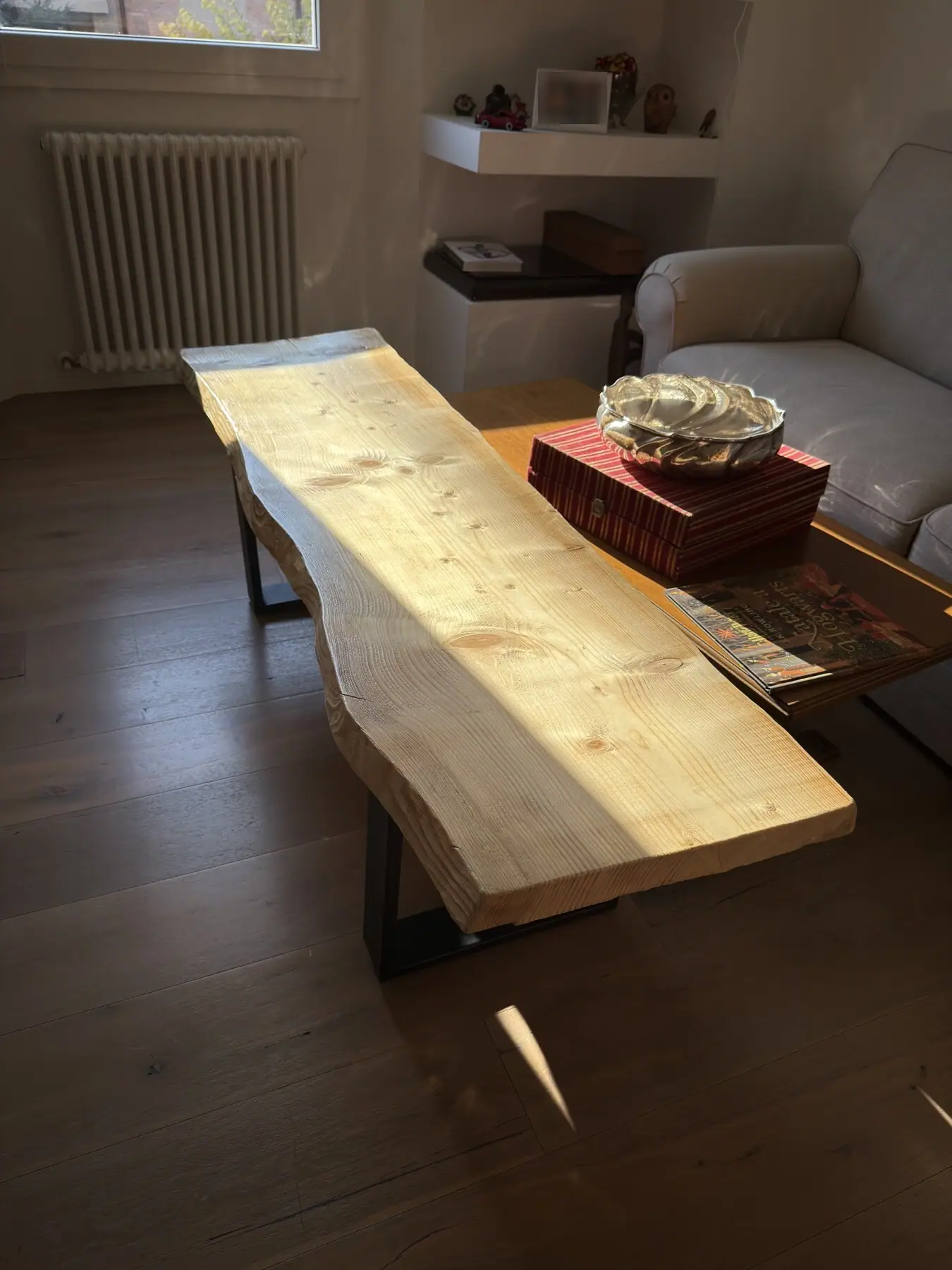
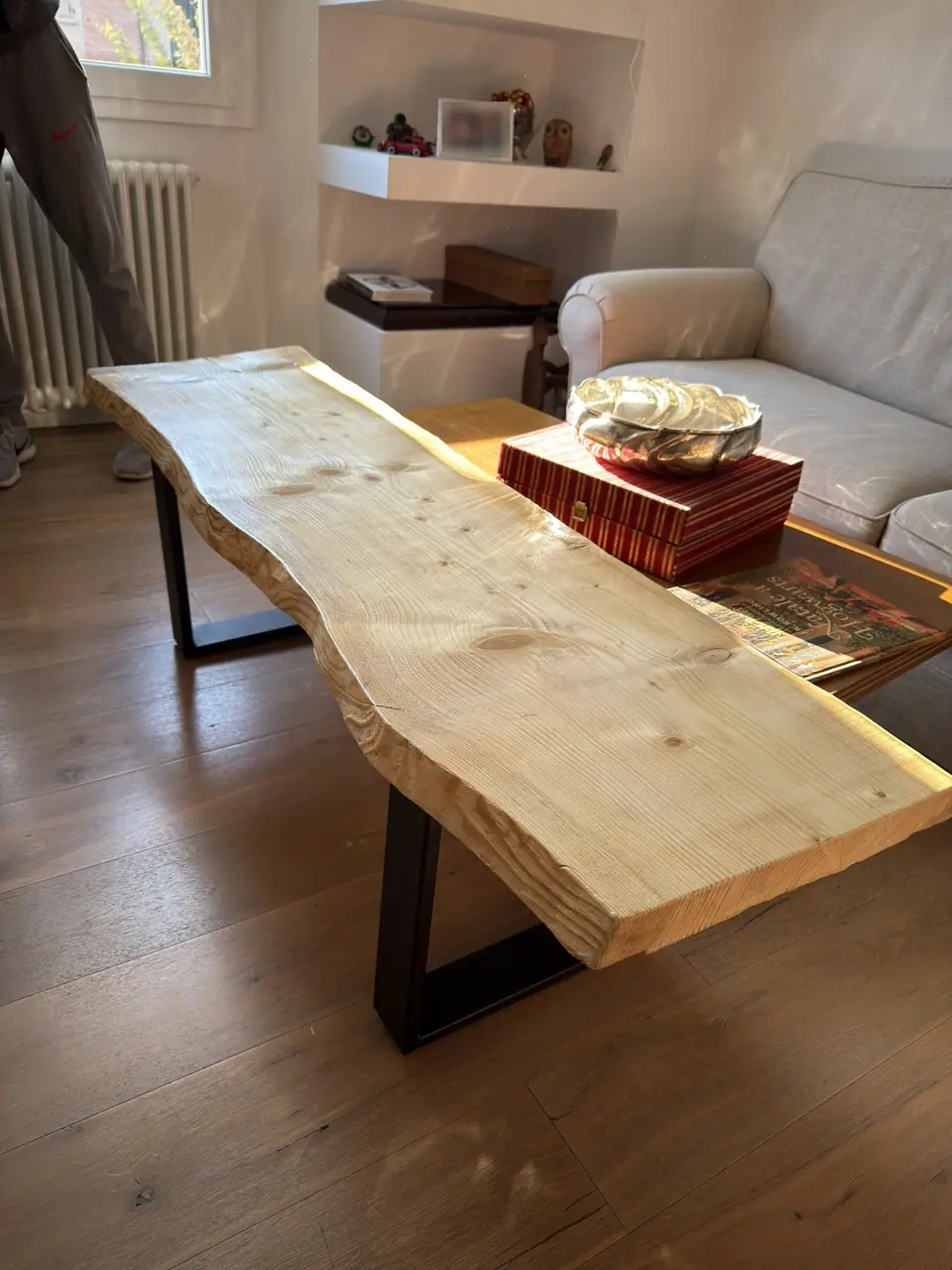
A solid-spruce, live-edge coffee table I built by hand, from choosing the log to fitting black steel legs on a board that did not come out perfectly flat.
Choosing the logLink to this section
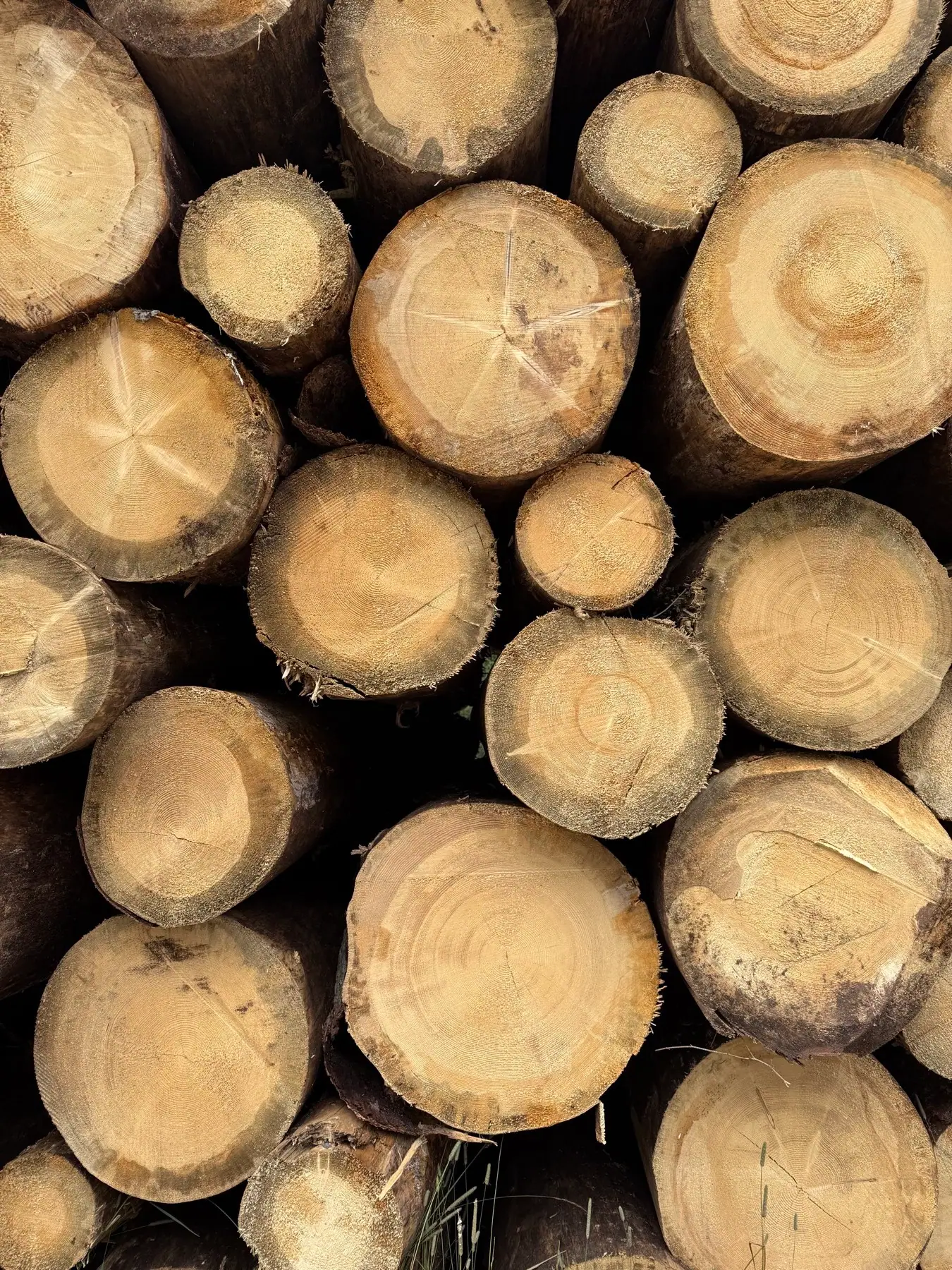
It all starts with the log. I looked for a piece with a fairly central, regular grain, because that decides how stable the board stays once it is cut. Straight fibres and a pith close to the centre mean fewer internal stresses and less chance that the wood will "move" over time.
From log to boardLink to this section
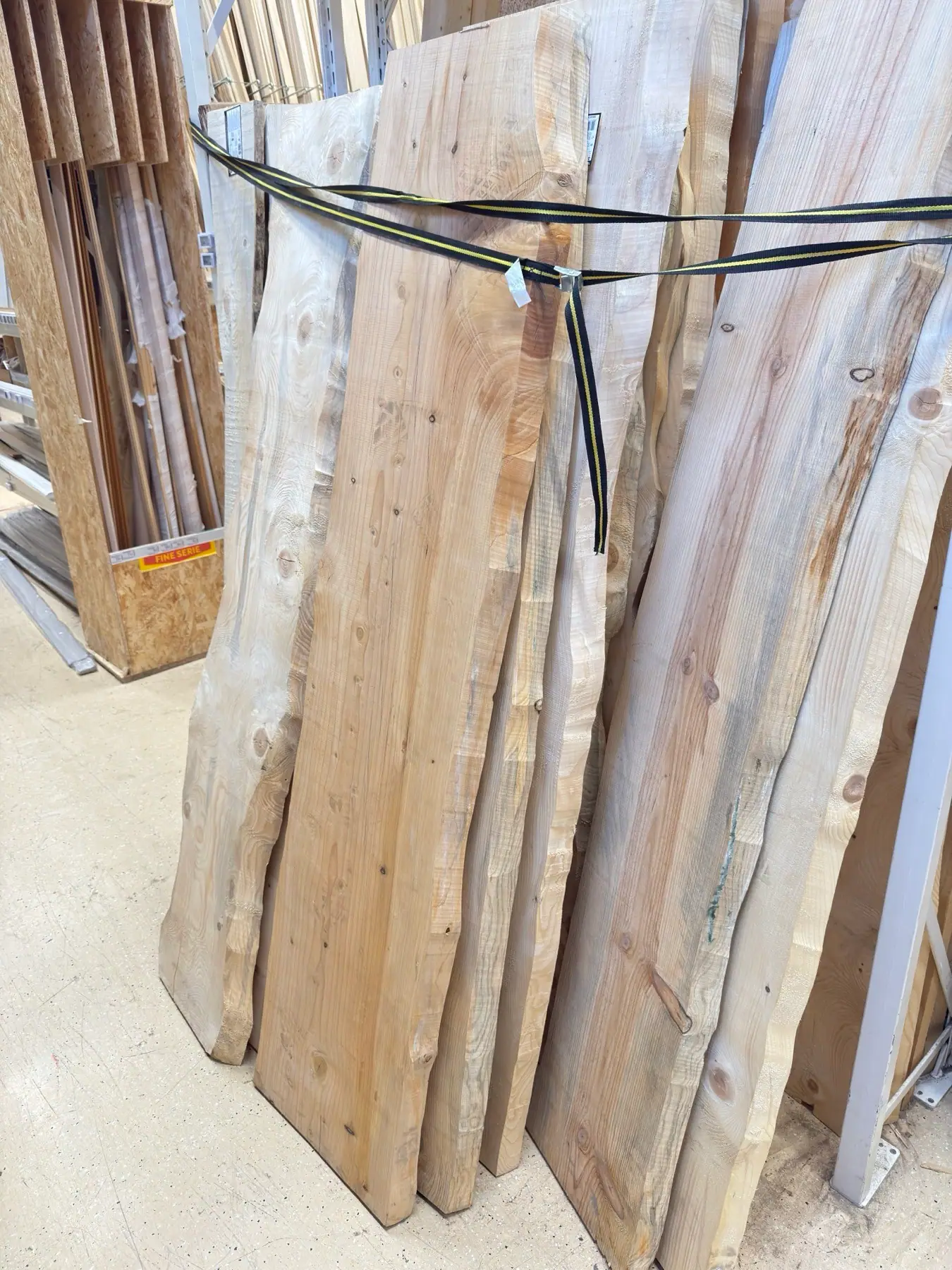
I broke the log down into boards by cutting and planing. The planing did not come out perfect, I'll admit. Even with a reasonably central grain, the board ended up slightly cupped, which is a classic result when the drying stresses are not fully balanced. I didn't force it flat. I worked around the cup in the later steps.
Sanding and finishingLink to this section
Next came sanding and blast-cleaning, moving up through the grits in successive passes until the surface was smooth and even, while keeping the natural live edge. For the finish I used a gel wood stain, three coats. It protects the wood and brings out the grain, and because it is a gel it runs less and is easier to control on a large surface.
The legsLink to this section
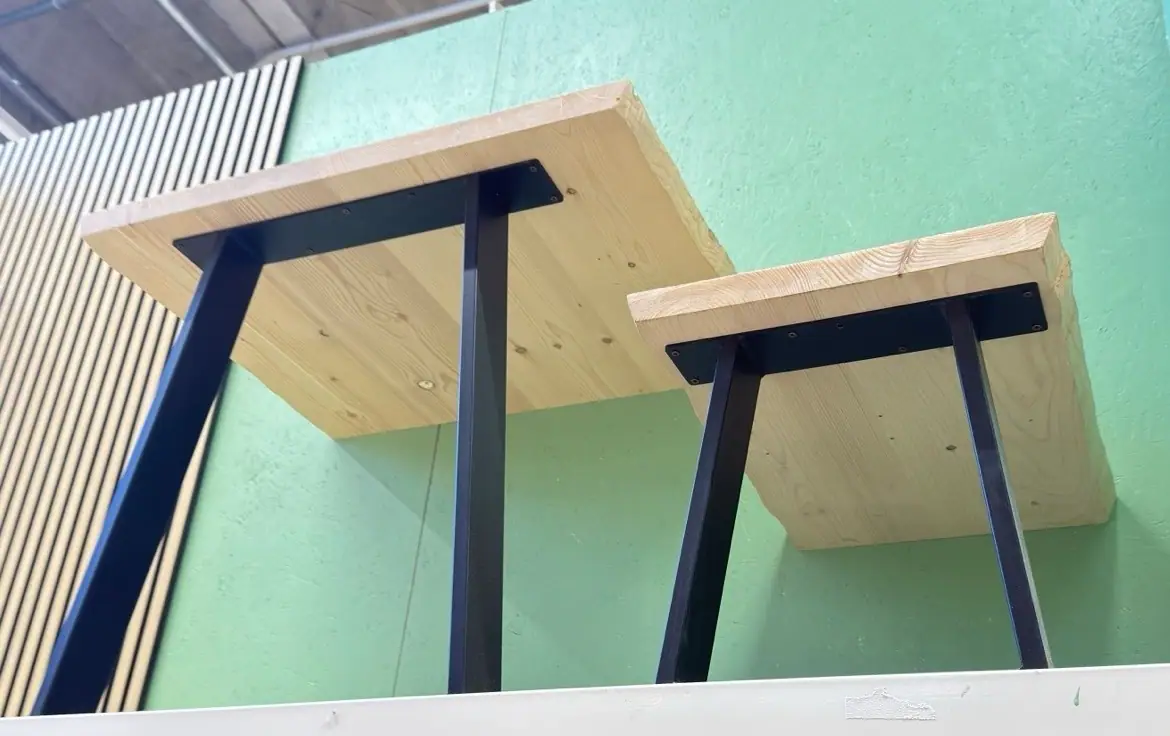
For the legs I pre-drilled the mounting points first, then drilled and tapped them for the fixing screws. The tricky part is the adjustment. I put calibrated shims under each mount so I would not over-tighten the screws, because on a board that is not perfectly flat you risk splitting the wood or twisting the top. I wanted a top as stable and level as possible without putting the fibres under tension.
The resultLink to this section
A solid-wood, live-edge coffee table on black steel legs. The raw edge and the slight cup are still there; I kept them.